

admin, Author at Pioneer Property - Page 8 of 14

The right home décor for your kids

Children are absolutely crazy about their rooms and hence, creating a beautiful nook for your child inside your home can be an extremely rewarding experience, even though it could be challenging. The children’s room is their refuge, their comfort zone, their very own arena to play, create, study and rest, and just be themselves. Hence a lot of thought must go into designing it, with a sharp eye for detailing.

Here are a few suggestions to design your children’s home:

# Keep it simple: One cardinal rule to remember while designing the kids’ room is that ‘less is more’. So use bare minimum furnishings and keep ample space to play and move around. Make sure their things are stored at reachable heights. Simple wall shelves in various shapes and sizes fitted at a user-friendly height can help.

# Respect their privacy: Children love to have their little private lair which cannot be easily accessed by elders. Create a cozy nook for them using curtain tents or flexible separators. This is where they can spend quality time with themselves with their favourite books perhaps. Their own magic retreat…

# Enable them to learn and grow: By creating a reading corner with a study table and maybe bulletin boards, you can encourage your child to read more and learn more. Posters with useful information or colourful geographical maps could also be helpful and enjoyable learning tools. The study corner can be a powerful catalyst to inspire learning and experimentation for those impressionable minds.

# Stoke their creativity: Children are growing and developing every day and they need a canvas to express their creativity which is coloured by their imagination. You can give them a blank canvas to paint or work on or use chalkboard paint on the wall which can actually work as a blackboard. Having their own canvas to express themselves can encourage their creativity as they can give their imagination a free rein.

# Bright and vibrant: All children love colours. So make their room as colourful and vibrant as possible, by using bright colours on the walls, curtains and upholstery, attractive wall hangings, colourful cutouts of their favourite cartoon series/superheroes characters, and similar embellishments.

# Add a whiff of magic: Children create magic in their minds with their unbridled imagination. You can add a touch of magic to their room by using glow paint that shines in the dark, a sky-ceiling or a city skyline painted on the fringes to create an interesting backdrop, feel and ambience. These small details can cast a spell on your child.

# Children like collecting things: Kids are habitual collectors. They collect and store everything, from stamps to posters to pictures of their heroes and everything that catches their fancy. So do up their room in such a manner that they can access all their little treasures easily. For instance, you can clip their cards and posters on a string and hang those up near the window or some other part of the room like a screen.

# Light is vital: Make sure that there’s ample natural light streaming into your child’s room. Use different types of lighting fixtures to give the room an interesting and happy look and don’t forget to install a reading light in the study corner.

# Go creative on storage space: Children need to stow away all their belongings when they are not using those, and remember every piece of their stuff is absolutely precious to them. So use creative ideas to make storage room for them like quirky wall-mounted shelves, bright corner cupboards and other imaginative nooks and crannies that add fun to the décor while serving as storage spaces as well.

Disclaimer : Information contained and transmitted by us are for information purposes only. All views and/or recommendations are those of the concerned author personally and made purely for information purposes. Nothing contained in the articles should be construed as business, legal, tax, accounting, investment or other advice or as an advertisement or promotion of any project or developer or locality. Pioneer Property Management Ltd. does not offer any such advice. No warranties, guarantees, promises and/or representations of any kind, express or implied, are given as to (a) the nature, standard, quality, reliability, accuracy or otherwise of the information and views provided in (and other contents of) the articles or (b) the suitability, applicability or otherwise of such information, views, or other contents for any person’s circumstances. We shall not be liable nor shall be held responsible in any manner for any action taken based on the published information (whether in law, contract, tort, by negligence, products liability or otherwise) for any losses, injury or damage (whether direct or indirect, special, incidental or consequential) suffered by such person as a result of anyone applying the information (or any other contents) in these articles or making any investment decision on the basis of such information (or any such contents), or otherwise. The users should exercise due caution and/or seek independent advice before they make any decision or take any action on the basis of such information or other contents.


Ready-to-move-in properties gaining traction

House-hunters are often vexed by the dilemma of choosing between a ready-to-move-in property and an under-construction one. However, the pandemic has swung the pendulum emphatically towards the ready-to-move-in (RTMI) segment. In a survey conducted by Pioneer Property Management Ltd, almost 75% of aspiring home-buyers would like to choose an RTMI option at this juncture, particularly risk-averse customers.

There are a clutch of benefits that are luring the home-buyer towards RTMI properties. The first and most tangible advantage is you get and pay for what you see and not fret over unfulfilled promises in the prospectus or potential changes later. Besides, one can check out the final product in relation to the locality, quality of construction, the neighbours, social infrastructure, etc. And of course, your rental outgo can stop immediately if you want to move in right away. A ready property also rules out delays and cost escalations.

While those looking at a new property as an investment option might still consider under-construction projects, the actual end-users are increasingly plumping for a ready apartment, thus able to own an immediate real estate asset.

This customer trend has also forced a rethink among real estate developers on the strategy front. So the focus now has shifted firmly to existing inventory, which for many are substantial in size, with new project launches often being put on the backburner. To clear the supply overhang, many developers are offering sops to the buyers in the shape of reduced stamp duty, ‘move in now and pay later’, lower interest rates and other benefits to sway customers.

What are the advantages of an RTMI property?

# Immediate possession: As the label ‘ready-to-move-in’ suggests, you can take possession of your chosen apartment/house immediately and start living there, as opposed to an under-construction property where you might have to wait for years before you get possession.

# Mitigates risks: Sometimes there can be an inordinate delay in construction and delivery of a property and one could incur huge losses in the process. There have also been instances of projects being abandoned midway, leaving the buyer stranded. An RTMI home mitigates such risks.

# No more house rent: Opting for an under-construction property often means you have to carry on paying your rent as well as your EMIs till such time you get possession. However, in the case of an RTMI home, you can move in immediately and stop paying rent.

# You get what you see: When you are investing in an under-construction property, it’s often based on a brochure or an AV content or perhaps a model flat. The actual product when delivered can look and feel a lot different at times. However, in an RTMI apartment, you get to see the finished product, the actual apartment you will be living in. This helps you make an informed choice.

# Instant tax relief: You can claim tax benefits on your home loan immediately if you opt for an RTMI property on both principal and interest payment. On the other hand, for an under-construction property, you will have to wait till you get possession to enjoy any tax exemption.

# Assess ambient infrastructure: While selecting an RTMI property, you can easily evaluate and experience the immediate locality and its infrastructure, besides the in-house facilities of the project before buying the apartment/house.

# Stick to your budget: For any under-construction property, unforeseen delays can jack up the price significantly and you might have to fork out the extra amount that hits your budget for a six. However, in the case of an RTMI property, it’s possible for you to pick a flat within your budget without the fear of cost escalation.

# Avoid GST: While buying an RTMI property, a customer at present doesn’t have to pay any GST. An under-construction property, however, would have a 12% GST slapped on it. This can come to a really substantial amount.

# Enjoy rental income: In case you are not planning to live in the RTMI apartment immediately, you can start earning rental income immediately by letting it out. This can help you pay your EMIs.

# Re-selling is easy: Re-selling a ready property is much easier and hassle-free than selling an under-construction one. Sometimes one must wait till the entire project is complete before the apartment can be transferred.

Disclaimer : Information contained and transmitted by us are for information purposes only. All views and/or recommendations are those of the concerned author personally and made purely for information purposes. Nothing contained in the articles should be construed as business, legal, tax, accounting, investment or other advice or as an advertisement or promotion of any project or developer or locality. Pioneer Property Management Ltd. does not offer any such advice. No warranties, guarantees, promises and/or representations of any kind, express or implied, are given as to (a) the nature, standard, quality, reliability, accuracy or otherwise of the information and views provided in (and other contents of) the articles or (b) the suitability, applicability or otherwise of such information, views, or other contents for any person’s circumstances. We shall not be liable nor shall be held responsible in any manner for any action taken based on the published information (whether in law, contract, tort, by negligence, products liability or otherwise) for any losses, injury or damage (whether direct or indirect, special, incidental or consequential) suffered by such person as a result of anyone applying the information (or any other contents) in these articles or making any investment decision on the basis of such information (or any such contents), or otherwise. The users should exercise due caution and/or seek independent advice before they make any decision or take any action on the basis of such information or other contents.

How to choose the right floor while buying a new apartment

A home-buyer, before settling on an apartment, would usually take into account a number of factors including price of the property, location, reputation of the builder, built-in amenities and more. When the apartment is in a highrise building, as is the case more often than not nowadays, particularly in metro cities, one compelling factor which tilts the needle for the buyer is often which floor the apartment sits on.

However, the floor preference varies from customer to customer. While some would stick to the lower floors, others would prefer going as high up as they can, while many would like to sit somewhere in-between. Both higher and lower floors have their pros and cons, and the home-buyers should try to make an informed choice based on the criteria that matter to them the most. These would typically include factors like view, ambient noise, accessibility, security arrangement and more.

Here are some of the elements to consider to zero in on your ideal floor:

# View: The upper floors of a highrise apartment tower are likely to offer a better view. So if a scenic perspective from your balcony or your windows is what you pine for, go for the higher floors.

# Ambient noise: Another reason to choose a higher floor is to insulate yourself from the street noises and all the commotion that is likely to be caused by residents and visitors coming in and going out, starting their cars, vendors, etc.

# Privacy: A higher floor is again a great choice if you are someone who loves peace and quiet, more so if the highrise is in a crowded location. From your higher perch, you can cut out the din below.

# Natural light & ventilation: As you go higher up in a tall building, you get more daylight washing into your apartment, whereas the lower floors could be much darker, necessitating the use of artificial lights even during the day. Also, the menace of rodents and insects would be much less on the upper floors.

# Power consumption: It is generally assumed that you will consume more electricity if you are living on a higher floor. This comes from the notion that upper floors get more heated and you end up using your air-conditioners more. However, this is not always the case, since higher floors are often breezier. So ponder a bit on that.

# Rental income: Although it is normally perceived that lower floors yield better rental incomes, it really depends a lot on the climate of the region, India being such a vast country, with diverse weather conditions. For instance, while in a hot place like Delhi-NCR, the preference might be for the ground or lower floors, in a cooler city like Bangalore, higher floors would be more in demand.

# Security arrangement: Generally upper floors are deemed safer and more secure, since security at the lower floor levels can theoretically be breached with more ease. Also, higher floors are likely to protect you more from intrusion.

# Access to apartment: For those home-seekers averse to waiting for the elevator, the lower floors perhaps hold out more attraction since they can easily use the stairs instead.

# Family situation: For families with elderly members or small children or with anyone who might have a mobility issue, a lower floor might be a more convenient option. This applies to those with a fear of heights as well.

# Structural issues: It has been seen that the top and ground floors of a highrise might be victims of water seepage and drainage issues due to certain structural deficiencies. Bearing this in mind, many buyers opt for the middle floors.

Disclaimer : Information contained and transmitted by us are for information purposes only. All views and/or recommendations are those of the concerned author personally and made purely for information purposes. Nothing contained in the articles should be construed as business, legal, tax, accounting, investment or other advice or as an advertisement or promotion of any project or developer or locality. Pioneer Property Management Ltd. does not offer any such advice. No warranties, guarantees, promises and/or representations of any kind, express or implied, are given as to (a) the nature, standard, quality, reliability, accuracy or otherwise of the information and views provided in (and other contents of) the articles or (b) the suitability, applicability or otherwise of such information, views, or other contents for any person’s circumstances. We shall not be liable nor shall be held responsible in any manner for any action taken based on the published information (whether in law, contract, tort, by negligence, products liability or otherwise) for any losses, injury or damage (whether direct or indirect, special, incidental or consequential) suffered by such person as a result of anyone applying the information (or any other contents) in these articles or making any investment decision on the basis of such information (or any such contents), or otherwise. The users should exercise due caution and/or seek independent advice before they make any decision or take any action on the basis of such information or other contents.

10 most celebrated architectural marvels of the modern world

There are hundreds of high-profile built structures strewn around the modern world. However, only a few attain the stature of timelessness and will remain reference points of excellence maybe 50 years or a century from now. Here is an eclectic roster of 10 incredible architectural creations of the modern world:

# Burj Khalifa, Dubai: The tallest artificial structure in the world designed by architect Adrian Smith, this mixed-use tower soars majestically to a dizzying height or 829.8 metres with 160 stories. Besides housing offices and high-end boutique residences, the Burj Khalifa also has the Armani Hotel Dubai and the Armani Residences on its cavernous premises. Visitors can enjoy breathtaking views of Dubai city from the Burj Khalifa SKY at the top, the world’s tallest observation deck. A standout feature is the ‘World’s Voices’ created with 196 cymbals and water cascading from the ceiling at the entrance lobby.

# Guggenheim Museum, Bilbao: A signature creation of celebrated architect Frank Gehry, this art museum in Spain is considered one of the most influential buildings in the world. There are 20 gallery rooms spread across three floors which incorporate design elements from modern to postmodern to the here and now. Such has been the magnetic attraction of the Guggenheim Museum that it has been able to draw visitors from across the world in their millions and completely turned the economy of Bilbao around, while helping reduce crime rate in the city significantly.

# The ‘Bird’s Nest’, Beijing: The National Stadium of Beijing designed by the Basel-based architecture house of Herzog and de Meuron, and constructed for the 2008 Summer Olympics, is regarded as one of the architectural wonders of today’s world. The shell or the outer structure, made of steel meshes, resembles a bird’s nest. Shopping and entertainment zones are also being incorporated into the gigantic stadium’s perimeter.

# Sydney Opera House: Designed by Danish architect Jorn Utzon and completed by an Australian architecture team headed by Peter Hall, this iconic performing arts centre at Sydney Harbour is one of the most stunning architectural creations of the contemporary world and a designated UNESCO World Heritage site. One of the most famous and recognizable buildings in the world, the Sydney Opera House also has a concert hall, playhouse and studios, a drama theatre and a proscenium theatre as well, with an average annual performance count of over 1,600 to enthrall visitors from around the world.

# Milwaukee Art Museum, Wisconsin: The critically-acclaimed design of this art museum is spread across three different buildings designed by three different architects. While the War Memorial Center was designed by the Finnish-American architect Eero Saarinen in 1957, the Kahler Building was created by David Kahler in 1975. Later in 2001, the Quadracci Pavilion was designed by celebrated Spanish architect Santiago Calatrava, a signature creation overlooking Lake Michigan and embellished with pointed arches, flying buttresses and ribbed vaults.

# The Petronas Towers, Kuala Lumpur: The landmark Petronas Towers, the tallest twin towers in the world stretching 1,483 feet into the sky, were designed by Argentine-born American architect Cesar Pelli and completed in 1998. It has since become the calling card of Malaysia and a magnet to attract tourists from around the world. The famous skybridge was added later to provide structural support to the tall towers.

# Taipei 101, Taiwan: This giant structure, soaring 508 metres into the sky with the spire, was the world’s tallest building till the Burj Khalifa stripped it of its moniker in 2010. Designed by local architecture firm C.Y. Lee & Partners and also known as the Taipei World Trade Center, this uniquely designed building has elevators zipping up and down at 60mph, propelling you from the 5th to 89th floor in 37 seconds flat! The tower has an observation deck on the 88th and 89th floors, offering spectacular views, restaurants and a shopping mall.

# Marina Bay Sands Hotel, Singapore: Conceived by the fabled architect Moshe Safdie, Marina Bay Sands, owned by Las Vegas Sands, is a super-luxury resort which housed the world’s most expensive standalone casino when it opened its doors in 2010. Apart from the 2561-room hotel, this lavish property, now the unmistakable emblem of glitzy Singapore skyline, houses a massive shopping mall, The Shoppes at Marina Bay Sands, two giant theatres, a museum, a couple of floating Crystal Pavilions exhibition space and the largest atrium casino in the world, offering 500 tables and 1,600 slot machines.

# Heydar Aliyev Center, Baku: A signature design by illustrious Iraqi-British architect Zaha Hadid, this 57,500 square metre building complex was completed in 2012 and has attained iconic stature thanks to its fluid shape and flowing curved style that avoids sharp angles. This famous building in Azerbaijan was intended to represent a reaction to the rigid, Soviet-era architectural style and a reference to Islamic calligraphy, while incorporating elements of Azeri architectural language.

# Harpa Concert Hall, Reykjavik: Designed by Danish firm Henning Larsen Architects in collaboration with Danish-Icelandic artist Olafur Eliasson, The Harpa Concert Hall in the Icelandic capital is one of the most notable architectural creations in Scandinavia. Its structure has “a steel framework clad with geometric shaped glass panels”, which produces a kaleidoscopic effect of a spectrum of different colours, which is mesmerizing. The building was originally planned as part of a plan to redevelop the Austurhofn, also referred to as the World Trade Center, Reykjavik. However, plans had to be revised following the financial crisis that hit Iceland in 2008.

Disclaimer : Information contained and transmitted by us are for information purposes only. All views and/or recommendations are those of the concerned author personally and made purely for information purposes. Nothing contained in the articles should be construed as business, legal, tax, accounting, investment or other advice or as an advertisement or promotion of any project or developer or locality. Pioneer Property Management Ltd. does not offer any such advice. No warranties, guarantees, promises and/or representations of any kind, express or implied, are given as to (a) the nature, standard, quality, reliability, accuracy or otherwise of the information and views provided in (and other contents of) the articles or (b) the suitability, applicability or otherwise of such information, views, or other contents for any person’s circumstances. We shall not be liable nor shall be held responsible in any manner for any action taken based on the published information (whether in law, contract, tort, by negligence, products liability or otherwise) for any losses, injury or damage (whether direct or indirect, special, incidental or consequential) suffered by such person as a result of anyone applying the information (or any other contents) in these articles or making any investment decision on the basis of such information (or any such contents), or otherwise. The users should exercise due caution and/or seek independent advice before they make any decision or take any action on the basis of such information or other contents.

Simple tips to make your home look bigger

You can make some very basic alterations and use your imagination to give your home a more spacious look. Here are some easy-to-implement tips:

# Cut the clutter: Decongest your home by neatly arranging your stuff inside storage cabinets so that there is much less visual clutter. Keep the floors free and don’t crowd your walls with too many hangings like paintings or other fixtures. A minimalist approach towards interiors always helps create a sense of expanse and your home will look bigger.

# Use lighter shades: By using light colours on your walls, you will be able to maximize natural light and give a brighter, more spacious look to your apartment or house. Lighter shades exude a feel of openness and better ventilation, thus spreading a sense of calm and serenity, while darker colours can make your rooms look smaller since those tend to absorb light.

# Get creative with lighting: Your rooms will always look larger when they are well-lit. The first trick is of course to allow maximum natural light to filter in by opening up the windows and removing heavy drapes and curtains or using sheers. You can also try using creative lighting fixtures like recessed lighting, etc. These can have a dramatic effect on the sense of space.

# Use mirrors: Using mirrors on your walls or furniture can emphatically create an illusion of space and make your home look much bigger than it actually is. Consider large framed mirrors on the walls directed towards a focal point to enhance the sense of space. Mirrors reflect both natural and artificial light to brighten up your home and hence the mood.

# Use your imagination with arrangements: Customize your furniture to fit comfortably into your rooms. Accentuate the open spaces by placing the larger pieces against the walls and refrain from blocking the floor space with fixtures and accessories. Create built-in storage space within your furniture pieces so that you can further maximize your open spaces.

# Use glass wherever possible: Glass or other transparent materials can also enhance the sense of space magically. For instance, a clear shower enclosure works much better than an opaque one, creating an illusion of extra space in your bathroom. Glass can also be used on tabletops to make the space around those seem larger than they actually are.

# Keep upholstery, window fabrics plain: It is always advisable to use single-coloured upholstery for furniture and breezy sheer fabrics or linen for windows. By keeping it light and simple, you can create a perception of space and airiness.

# Decorate sparingly: Don’t clutter up your home with too much décor. The arrangements must be placed in a manner to minimize visual clutter. Remember, less is more and it’s important to let your walls breathe. Your home will automatically feel roomier.

# Try to create a centre of attraction: By using your imagination to create a focal point in every room, you can decongest your home visually as well. The idea is to have one zone or feature to catch the eye, so that you can keep the additional décor to a minimum.

Disclaimer : Information contained and transmitted by us are for information purposes only. All views and/or recommendations are those of the concerned author personally and made purely for information purposes. Nothing contained in the articles should be construed as business, legal, tax, accounting, investment or other advice or as an advertisement or promotion of any project or developer or locality. Pioneer Property Management Ltd. does not offer any such advice. No warranties, guarantees, promises and/or representations of any kind, express or implied, are given as to (a) the nature, standard, quality, reliability, accuracy or otherwise of the information and views provided in (and other contents of) the articles or (b) the suitability, applicability or otherwise of such information, views, or other contents for any person’s circumstances. We shall not be liable nor shall be held responsible in any manner for any action taken based on the published information (whether in law, contract, tort, by negligence, products liability or otherwise) for any losses, injury or damage (whether direct or indirect, special, incidental or consequential) suffered by such person as a result of anyone applying the information (or any other contents) in these articles or making any investment decision on the basis of such information (or any such contents), or otherwise. The users should exercise due caution and/or seek independent advice before they make any decision or take any action on the basis of such information or other contents.

Commercial Real Estate terms you must know

If you are planning to invest in commercial real estate, it’s very crucial that you acquaint yourself with some key terms linked to this segment. At the end of the day, a thorough knowledge of relevant terms in the domain of commercial real estate can only boost your return on investment. Here are some common but essential terms you might want to know about:

# Incidental expenditure: Whenever a commercial space is taken on rent, it involves certain extra costs over and above the base rent. These could include property tax, insurance, utilities, CAM charges, repairs, etc. These costs clubbed together are referred to as incidental expenditure.

# Gross rent lease: It’s a simple form of paying the rent and incidental expenses together either on a monthly or bi-monthly basis as per the agreement with the landlord.

# Altered gross lease: There can be a slightly modified or tailored version of the gross lease pact with the landlord amenable to picking up the tab for certain incidental costs, or part-paying insurance, property tax or CAM charges. The shared payment pattern must be agreed upon by both the parties.

# Option to buy: Sometimes, the lease is structured in such a manner that the tenant is given the option to buy out the commercial property at the expiry of the lease term.

# CAM (Common Area Maintenance) charges: CAM fees go towards operating expenditure of all the common areas of the commercial property, including elevators, stairways, lobby spaces, hallways, public washrooms, parking lots, etc.

# Usable square footage: This is the wall-to-wall actual amount of space being leased out to and reserved for the tenant. It’s extremely crucial to be aware of this usable space before inking the deal.

# Percentage rent lease: This is a mixed payment arrangement which has two components. One is the base rent which is constant for the lease period and the other is a fraction of a pre-agreed minimum-guarantee gross sales. This arrangement is very common in retail malls.

# Sops to tenants: The landlord might offer the tenant certain incentives like a rent-free period, reduced CAM charges or paying for any renovation/improvement work. These are referred to as ‘tenant inducement’.

# Trade fixtures: These are usually movable items like pieces of furniture, computers/laptops or any other equipment that you can take along without damaging the property in any manner when you are vacating the leased space. It is always advisable to properly delineate and mark out the ‘trade fixtures’ before the lease agreement is signed.

# LOI or Letter of Intent: The LOI is a document that incorporates the terms of the lease including lease time period, concessions, etc and is used for both leasing as well as purchasing commercial properties. This document is signed by both the parties before the deal is finalized.

# Turnkey improvements: These are modifications carried out by the developer to add value to the commercial property and make it more attractive to the tenant.

# Leasehold improvements: Such improvements entail modifications carried out by the landlord according to certain specifications laid out by the tenant to suit his/her type of business better. Such customized improvements usually become part of the property and can’t be removed, except in certain agreements where this clause has been built in.

# ROFR: The Right of First Refusal (ROFR) means that the tenant will be offered any extra space available on lease at any given point on a first-priority basis and has the right to either accept or reject that offer.

# Sublease cause: Sometimes there is a sublease clause built into the agreement by dint of which, the tenant can lease out a part of the property to another party for a certain duration.

# Escalation clause: This is a convenient tool to figure out the annual increase in rentals. The calculation is usually based on factors like operating costs, the consumer price index and property tax

Disclaimer : Information contained and transmitted by us are for information purposes only. All views and/or recommendations are those of the concerned author personally and made purely for information purposes. Nothing contained in the articles should be construed as business, legal, tax, accounting, investment or other advice or as an advertisement or promotion of any project or developer or locality. Pioneer Property Management Ltd. does not offer any such advice. No warranties, guarantees, promises and/or representations of any kind, express or implied, are given as to (a) the nature, standard, quality, reliability, accuracy or otherwise of the information and views provided in (and other contents of) the articles or (b) the suitability, applicability or otherwise of such information, views, or other contents for any person’s circumstances. We shall not be liable nor shall be held responsible in any manner for any action taken based on the published information (whether in law, contract, tort, by negligence, products liability or otherwise) for any losses, injury or damage (whether direct or indirect, special, incidental or consequential) suffered by such person as a result of anyone applying the information (or any other contents) in these articles or making any investment decision on the basis of such information (or any such contents), or otherwise. The users should exercise due caution and/or seek independent advice before they make any decision or take any action on the basis of such information or other contents.
Pio-Vista News Letter of Pioneer Property Management Limited

Land is always a critical asset but how does one put a price tag to a parcel of land

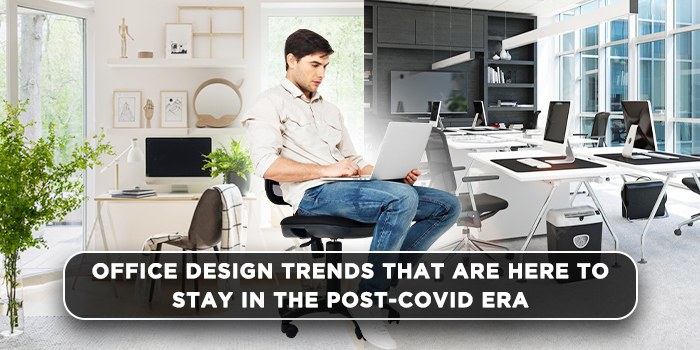
Office design trends that are here to stay in the post-Covid era

The pandemic has turned the world upside down and among so many other things, it is expected to have a huge impact on design trends for future offices. As the world limps back to normalcy and the dark clouds of Covid slowly but surely recede, people the world over are gradually going back to their offices.

But it isn’t easy by any means after months of lockdown, the constant anxiety, suffering, for some losing near and dear ones, and also the cultivated habit of working from home – it’s a big shift and there’s bound to be a lot of mental and physical lethargy. But of course, that will be tinged with the excitement of seeing your workmates in flesh and blood again and feeling that bonding all over once more.

These are factors that the new-age office design (or re-design) elements must be anchored on and that massive metamorphosis from standard office design is happening here and now, all around us. It’s almost like beginning from scratch, since nothing will be the same again, as the entire perspectives of both employer and employee have undergone a sea change.

While organizations have realized the high cost of real estate during the pandemic-induced WFH era and are hence keen on optimizing space, they are also faced with the challenge of motivating their employees to return to office and look ahead with positivity, helping them to tide over the trauma. This is inevitably triggering many a tweak and turn on the design board to create the dynamic, people-friendly, sustainable office today’s world demands.

These are a few design trends that are here to stay:

# Flexi, people-centric workspaces: A hybrid mode of work is the new norm in many organizations, that is a combination of WFH and coming to office in person. So today’s offices need to be nimble and focus on utilizing every sq ft of space by introducing smart features, while at the same time keeping in mind the mental and physical health of the employees. Simple elements like indoor plants, informal seating options, coffee machines and built-in downtime spaces can go a long way in imbibing that positive vibe so essential in this post-pandemic world.

# Sustainable design: With this welcome global chorus on climate change and sustainability, no organization can today remain an ostrich to its carbon footprint and other pollutants its functioning is producing. Hence, new office design or re-design has to be geared towards sustainability, from maximizing natural light and minimizing power consumption to rainwater harvesting to reducing plastic use, there are lots that can be done and built into the new workspace plan.

# Employees’ well-being: Health and well-being of the employees must be accorded maximum priority in commercial properties and etched into the design DNA of today’s workspaces. It always benefits the organization in the long run by way of increased productivity, hence better profits. More and more corporate entities are realizing the import of employee well-being. Healthier office ambience equals to lesser sick days. It’s a simple equation for the employers and the design team. So features like foolproof sanitization, better ventilation, Covid screens, ergonomic chairs and even some indoor games or workout facilities to help staff de-stress are incorporated. Some employers are also offering their employees gym memberships. All these efforts can help significantly in curbing attrition.

# Smart tech: Use of intelligent technology, particularly in a hybrid workspace, can be hugely beneficial. A clutch of digital solutions and smart apps are now available to calibrate space requirement and optimization in minute detail, factoring in all the relevant elements like occupancy level, balancing in-office and remote work modes, managing office resources and facilities, et al. Employees can also immensely benefit from the smart apps which make systems and processes really user-friendly and all modern design solutions usually incorporate these.

# A touch of home in office: With the WFH culture having taken deep roots during the long drawn-out pandemic phase, employees would naturally pine for certain home comforts and vibes by way of inertia. Hence, new-age office designers are careful to incorporate some residential elements like lounges, common spaces to meet up for a coffee, indoor plants, brighter colour schemes, interesting artworks, etc. The idea is to help create a more intimate and inviting ambience so that the employees can enjoy a feel of home at their workplace.

Disclaimer : Information contained and transmitted by us are for information purposes only. All views and/or recommendations are those of the concerned author personally and made purely for information purposes. Nothing contained in the articles should be construed as business, legal, tax, accounting, investment or other advice or as an advertisement or promotion of any project or developer or locality. Pioneer Property Management Ltd. does not offer any such advice. No warranties, guarantees, promises and/or representations of any kind, express or implied, are given as to (a) the nature, standard, quality, reliability, accuracy or otherwise of the information and views provided in (and other contents of) the articles or (b) the suitability, applicability or otherwise of such information, views, or other contents for any person’s circumstances. We shall not be liable nor shall be held responsible in any manner for any action taken based on the published information (whether in law, contract, tort, by negligence, products liability or otherwise) for any losses, injury or damage (whether direct or indirect, special, incidental or consequential) suffered by such person as a result of anyone applying the information (or any other contents) in these articles or making any investment decision on the basis of such information (or any such contents), or otherwise. The users should exercise due caution and/or seek independent advice before they make any decision or take any action on the basis of such information or other contents.

Use of amenities to attract home-buyers

Live. Work. Play. These three words encapsulate the basic drivers that influence home-buying decisions these days. In today’s dense and stressful urban lifestyle, new-age home-seekers are not just looking for a dwelling unit, they are looking for a “home-plus”. They want to live in a space (preferably a gated community) that can calm their minds and help ease their stress through a plethora of built-in features and amenities like clubhouse, gym, swimming pool, children’s park, power backup, safe water supply, a reliable security system and lots more.

Presence of extra features and amenities can often sway the home-buyers’ decision and real estate developers are scrambling to provide as many “plus” features in their projects as they possibly can. Perhaps more so in the post-pandemic world, home-seekers have become much more conscious of both physical and mental well-being, and this is inextricably linked to the social infrastructure of the property. Hence homes are no longer where you return from work only to retire for the day. It’s your personal domain to relax and enjoy with the family.

Some of the common shared amenities provided inside residential complexes are:

# Gymnasium

# Swimming pool

# Children’s play area

# Clubhouse

# Organized parking slots

# 24/7 power backup

# Dedicated power transformer

# Indoor games

# Jogging/walking pathway

# Landscaped greens

# Yoga, meditation center

Why have amenities become such an attractive proposition?

Nowadays, people want to live in residential complexes with a well-planned social infrastructure. The hectic pace of life and the stress it causes have changed the outlook of home-seekers radically. It’s about relaxation, healthy environment as well as entertainment options without having to step out of the housing project.

Some of the reasons why amenities in a residential property are deemed precious include:

# Need to de-stress: Urban stress is the biggest killer today, and people are always looking for avenues to de-stress. So, at the end of a draining workday, what can be more alluring to return home and go for a relaxing swim or a rejuvenating jog on the greens?

# An in-built community: A housing society with multiple amenities also offer a strong sense of community bonding inside the complex itself. Residents come together to celebrate festivals, take part in sports and cultural activities together and in general, make friends and create a micro-community with healthy bonhomie.

# Something in it for all: Extra features designed in modern residential properties are meant to cater to different age groups, hence there’s something for everybody. Whether it’s a morning stroll in the park or a vigorous session of gym-ing, residents of all ages can find their own pursuit.

# The lifestyle quotient: A well-appointed condo complex can boost your lifestyle quotient significantly. Being able to play tennis or billiards or having a meal at the clubhouse restaurant with family and friends without needing to step out is a hugely gratifying luxury.

# Sense of well-being: For a large percentage of the modern home-buyer, personal and family health and well-being is a very important consideration while choosing a home. Hence, well-conceived projects with gym, sports facilities, health spa, yoga and meditation centre, etc are in high demand. Home has to be a holistic entity that helps promote physical, mental and social well-being.

Disclaimer : Information contained and transmitted by us are for information purposes only. All views and/or recommendations are those of the concerned author personally and made purely for information purposes. Nothing contained in the articles should be construed as business, legal, tax, accounting, investment or other advice or as an advertisement or promotion of any project or developer or locality. Pioneer Property Management Ltd. does not offer any such advice. No warranties, guarantees, promises and/or representations of any kind, express or implied, are given as to (a) the nature, standard, quality, reliability, accuracy or otherwise of the information and views provided in (and other contents of) the articles or (b) the suitability, applicability or otherwise of such information, views, or other contents for any person’s circumstances. We shall not be liable nor shall be held responsible in any manner for any action taken based on the published information (whether in law, contract, tort, by negligence, products liability or otherwise) for any losses, injury or damage (whether direct or indirect, special, incidental or consequential) suffered by such person as a result of anyone applying the information (or any other contents) in these articles or making any investment decision on the basis of such information (or any such contents), or otherwise. The users should exercise due caution and/or seek independent advice before they make any decision or take any action on the basis of such information or other contents.

Home buyers in India getting younger

Home buyers are getting younger. Recent studies have revealed that the average age of the Indian home-buyer, which used to be 50-plus earlier, has plunged to the early-30s and even late-20s. Millennials (those born between 1981 and 1996) are driving growth in the property market and being 34% of the population (a whopping 450 million-plus), they are expected to keep propelling the residential realty trade forward over the next few years.

One of the most decisive triggers has obviously been the pandemic. In fact, the millennials accounted for almost half of all properties sold in 2020. Clearly, this is a very critical demographic and many of these young professionals realized the need for their own property during the tough lockdowns and work-from-home protocols precipitated by Covid-19.

A number of other factors have been driving traction from young home-buyers, including low interest rates, health concerns, family pressure and a stable income structure, particularly in the IT/ITeS sector, which employs a large chunk of millennials and has been extremely flexible with remote-work options to curb attrition. Also, obtaining home loans is much easier for youngsters, and the average age of home loan borrowers has also come down drastically, with even 23 to 25-year-olds going in for home loans. Besides, home loans cascade into tax benefits.

Earlier, the young professionals would prefer investing more in asset-class instruments like mutual funds and stocks, but these options aren’t as stable as before. On the flip side, housing is still considered the most stable investment, since the realty market has largely managed to bounce back from the pandemic and also the withstood the blowbacks of the Ukraine conflict.

Another trend among young home-seekers is that they don’t necessarily want to live in the heart of the city or downtown areas anymore. Instead, they are happy residing in the fringe areas or suburbs, where property prices are much more affordable. Also, with the now-must-have flexibility to work from home-offices, small flats are out and 2.5 to 3BHK apartments are in. Real estate developers around the country are already reorienting plans to meet the rising demand in this segment.

What features do the youngsters fancy in their new homes?

# Millennials are tech-savvy and want all the creature comforts smart home features can provide by being electronically and digitally-enabled.

# They are environmentally conscious and often prefer green homes which don’t impact the environment adversely.

# Young home-buyers are not averse to staying in peripheral areas, but there should be comfortable connectivity with the city, to avail of shopping and entertainment options during their downtime.

# Youngsters are also much more health-conscious these days. Hence while looking for homes in leafy and less-polluted localities, built-in facilities like gym, swimming pool and tennis courts are often attractive value-add.

What is the outlook with millennial home-buyers?

Industry experts concur that such is the innate strength of the millennial demand for new homes that all real estate developers must re-calibrate their growth strategy to make this demographic the spearhead of their consumer base and design new supplies accordingly. This means catering to the specific demands of this age group, understanding their needs and aspirations and customizing the apartments/bungalows to satisfy those wants. After all, the millennial home-seekers will continue to have a huge say in moving the needle in the residential property market for years to come.

Disclaimer : Information contained and transmitted by us are for information purposes only. All views and/or recommendations are those of the concerned author personally and made purely for information purposes. Nothing contained in the articles should be construed as business, legal, tax, accounting, investment or other advice or as an advertisement or promotion of any project or developer or locality. Pioneer Property Management Ltd. does not offer any such advice. No warranties, guarantees, promises and/or representations of any kind, express or implied, are given as to (a) the nature, standard, quality, reliability, accuracy or otherwise of the information and views provided in (and other contents of) the articles or (b) the suitability, applicability or otherwise of such information, views, or other contents for any person’s circumstances. We shall not be liable nor shall be held responsible in any manner for any action taken based on the published information (whether in law, contract, tort, by negligence, products liability or otherwise) for any losses, injury or damage (whether direct or indirect, special, incidental or consequential) suffered by such person as a result of anyone applying the information (or any other contents) in these articles or making any investment decision on the basis of such information (or any such contents), or otherwise. The users should exercise due caution and/or seek independent advice before they make any decision or take any action on the basis of such information or other contents.