

July 2023 - Pioneer Property

What are IGBC-certified green buildings?

A built structure earns the moniker of a “green building” when it puts the natural environment at the heart of its form and function. This is done by using sustainable materials in construction and optimization of natural resources like water, light and air to improve energy efficiency and ensure better ventilation. Such buildings produce less non-biodegradable waste and offers healthier indoor air quality to occupants.

The pandemic which turned our world upside down, has had one positive impact on our lives, though. It has brought us back in touch with Nature, leading to a renewed interest and traction for green buildings, as more and more people are now concerned about the ecological footprints their residences or offices are leaving on the environment.

The Indian Green Building Council (IGBC) was created in 2001 as an outfit of the Confederation of Indian Industry (CII) with the vision of enabling “a sustainable built environment for all and help India become a global leader in sustainable built environment by 2025”. IGBC Green Homes is the first rating programme developed in India exclusively for the residential sector.

The consensus-based rating system was formulated keeping in mind tech inputs and raw materials that can be easily sourced in today’s market scenario, with the objective of promoting the use of local resources for design and construction, energy efficiency, water conservation, reduced use of fossil fuels and responsible handling of domestic waste to protect the environment.

The system is both prescription- and performance-based, appraising mandatory requirements as well as credit points and is designed to be user-friendly. The primary concern is the quality of life that occupants can expect, assessed based on national as well as global parameters.

Benefits of IGBC Green New Buildings certification

The benefits of Green New Buildings certified by IGBC are numerous, whether tangible or intangible. The tangible benefits for occupants would primarily include a significant reduction in power and water consumption. While water use could be cut down by 30 to 50 per cent, a 20 to 30 per cent reduction in energy spending could be achieved in the best-case scenario.

The intangible advantages are no less critical and would include superior indoor air quality, lots of natural light filtering in, leading to significant health and well-being benefits for occupants, and of course safeguarding natural resources which are finite, besides more efficient handling of waste. All these pluses automatically result in enhanced resale value of the property.

Categories addressed by the IGBC rating system include:

# Site selection & planning
# Water conservation
# Energy efficiency
# Materials & resources
# Indoor air quality
# Innovation & design process

Scope of IGBC rating system

The IGBC Green Homes Rating System evaluates new residential buildings and major renovation work in existing ones, for both individual units and multi-dwelling residential units. These would include gated communities, residential high-rises, hostels, serviced apartments, resorts, guest houses, etc.

The green building movement in the Indian real estate industry is set to reach an inflection point with the country expected to do more to reduce its carbon footprint by using more sustainable materials in construction. With India now accounting for 10 to 12 per cent of global space for green structures, the confidence in the movement is growing every day as more and more developers jump onto the green building bandwagon.

Disclaimer : Information contained and transmitted by us are for information purposes only. All views and/or recommendations are those of the concerned author personally and made purely for information purposes. Nothing contained in the articles should be construed as business, legal, tax, accounting, investment or other advice or as an advertisement or promotion of any project or developer or locality. Pioneer Property Management Ltd. does not offer any such advice. No warranties, guarantees, promises and/or representations of any kind, express or implied, are given as to (a) the nature, standard, quality, reliability, accuracy or otherwise of the information and views provided in (and other contents of) the articles or (b) the suitability, applicability or otherwise of such information, views, or other contents for any person’s circumstances. We shall not be liable nor shall be held responsible in any manner for any action taken based on the published information (whether in law, contract, tort, by negligence, products liability or otherwise) for any losses, injury or damage (whether direct or indirect, special, incidental or consequential) suffered by such person as a result of anyone applying the information (or any other contents) in these articles or making any investment decision on the basis of such information (or any such contents), or otherwise. The users should exercise due caution and/or seek independent advice before they make any decision or take any action on the basis of such information or other contents.
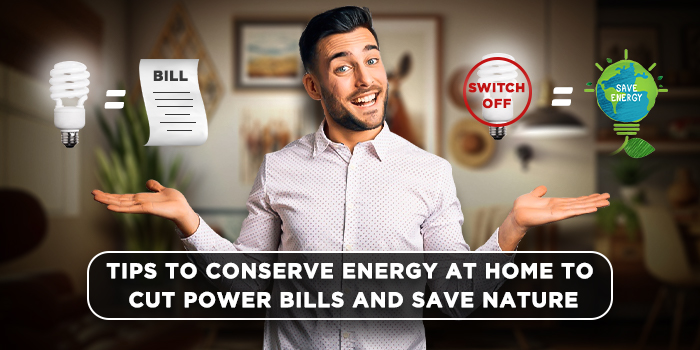

Tips to conserve energy at home to cut power bills and save nature

Conserving energy at home is the habit of using less power to lower energy bills, which in turn reduces the environmental impact of producing and consuming energy. While it entails dialing down on the use of electricity and gas, it’s also about simple day-to-day habits like turning off the lights and fans when you step out of a room, or appliances when not in use.

You can also try performing some manual household chores like hang-drying clothes instead of putting those in the dryer, using your hands to wash dishes and not putting them in the dishwasher, etc. These small habits in everyday life can go a long way in not only lessening your power bill load, but also contribute significantly towards protecting the environment. After all, there are only finite reserves of energy on our planet and when we consume energy responsibly at home, we are doing a world of good to our planet as well.

Here are some simple tips to save energy at home:

# Switch off: A good place to start in curbing domestic energy consumption is to inculcate the habit of switching off all lights and fans while leaving a room. It’s a simple daily practice that can result in substantial savings in your energy bills if followed religiously

# Change your lightbulbs: Switch to LED (light-emitting diode) bulbs which consume at least 25% less electricity and last up to 10 times longer than traditional incandescent lightbulbs. What’s more, these lights are stylish and much more affordable.

# Use energy-efficient appliances: Opting for smarter, more energy-efficient home appliances can help cut energy usage by 50%. This is all the more applicable for refrigerators and dryers, which are extremely energy-intensive consumer durables. Also, energy-efficiency of appliances wane with age. So, make sure you do proper preventive maintenance and replace those when necessary.

# Unplug your devices: Make sure to switch off all your devices when not in use. Even when you keep your devices on standby mode, they consume power. So, it’s best to unplug your TV or DVD player while idle. Smart automated devices can detect when the device is not in use and turn off the power supply

# Use instant water heaters: Switching to instant water heaters can help save up to 25% of your energy bill compared to when you use storage heaters. Every time you don’t use the water you heat and store in the tank, it gets cold and must be heated all over again. This results in needless power bills. Instant heaters, on the other hand, provide water on demand and don’t need a storage tank. Hence, there’s no standby energy loss

# Cut down on water usage: If you work consciously towards it, you can reduce domestic water consumption substantially. For instance, take quick showers and turn off faucets when not in use, even for a few seconds when doable. Also, use only the amount of water you need during cooking. It helps to reduce water consumption if you keep the lid on while cooking

# Insulate your home properly: When you take care to insulate your home well, it’s a lot easier to keep the inside cool or heated, whatever the need of the season. Using double-glazed glass on windows and making sure that the doors and windows are shut properly when the air-conditioners are in use helps save energy and lower your bills.

# Use solar-powered devices: There are a clutch of solar-powered home appliances and electronic products available in the market these days which can help in not only cutting power bills but protecting the environment as well. Also, solar-powered electronic devices are easier and cheaper to maintain

Disclaimer : Information contained and transmitted by us are for information purposes only. All views and/or recommendations are those of the concerned author personally and made purely for information purposes. Nothing contained in the articles should be construed as business, legal, tax, accounting, investment or other advice or as an advertisement or promotion of any project or developer or locality. Pioneer Property Management Ltd. does not offer any such advice. No warranties, guarantees, promises and/or representations of any kind, express or implied, are given as to (a) the nature, standard, quality, reliability, accuracy or otherwise of the information and views provided in (and other contents of) the articles or (b) the suitability, applicability or otherwise of such information, views, or other contents for any person’s circumstances. We shall not be liable nor shall be held responsible in any manner for any action taken based on the published information (whether in law, contract, tort, by negligence, products liability or otherwise) for any losses, injury or damage (whether direct or indirect, special, incidental or consequential) suffered by such person as a result of anyone applying the information (or any other contents) in these articles or making any investment decision on the basis of such information (or any such contents), or otherwise. The users should exercise due caution and/or seek independent advice before they make any decision or take any action on the basis of such information or other contents.