
July 2022 - Pioneer Property

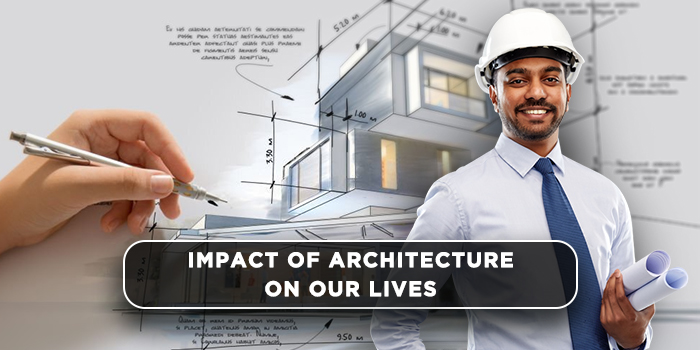
Impact of Architecture on our Lives

Architecture has a profound impact on our lives. From shaping our health to mood to productivity, the design and layout of the built space we occupy, whether it’s our home or workplace, plays a huge role. Good architecture combines both art and science and draws elements from the diverse domains of occupant psychology, economics and politics of the region, sociology and a lot more.

A good architect should be able to relate to the emotional reactions that built spaces trigger among the occupants, since these feelings can’t really be quantified. It’s a process of constant learning of human emotions and deep research into the human psyche that can conjure elements to create a successful design.

“Architecture is a tool that moves life around us, which directly or indirectly impacts the way we react, the way we live and our well-being,” observes veteran architect Vinoo Chadha.

What are the different ways that architecture impacts our lives?

While architecture has a massive impact on society and the environment in general, it also has the power to affect us psychologically, impacting each individual in a unique way. Here are a few of the many ways we are influenced by architectural language:

# Our perception of spaces: We all perceive spaces in our own ways, and this perception is shaped by demographics, period, cultural nuances and a host of other factors. The power of architecture plays with our emotions as we react to built spaces very differently at a micro level. At a macro level, the architect’s endeavour would always be to design in sync with the environment.

# It affects our health, mood and productivity: Yes, architecture has the power to do all this. A sensitively designed space can elevate our mood and enrich us with a sense of well-being by eloquently relating to the environment. A space designed for abundant natural light and exuding a sense of openness, aesthetics and freedom can surely lift your mood and subsequently, improve productivity.

# Impacts community development: The impact of good design is reflected positively at the community level as well. Imaginatively designed built spaces can serve the purpose of connecting people and nurturing a sense of community bonding and togetherness. This can go a long way in determining the quality of life in societies and communities.

# Impacts technology, energy and environment: At a time when cutting-edge technology and digitalization have been re-shaping every industry, architecture has been adapting to this digital and build-tech revolution adroitly and at multiple levels. The marriage of design with modern technology has resulted in cutting down on energy consumption and manpower requirement, reducing carbon footprint and thus helping take built spaces into a sustainable future.

Some of the revolutionary technologies currently being utilized by the architects’ fraternity include biodegradable building materials, solar panels, prefab modules, smart digital controls, water-efficient tech, etc.

# Can help social causes: Architecture also has the power to alleviate the miseries of underprivileged people, climate-change and war refugees and those facing social injustice of various forms and lack access to basic needs like food, water and sanitation. Good architecture can design sensitive shelters to bring communities together and minimize their hardships in many ways.

# Help combat climate change: The ravages of climate change are impacting lives around the world like never before, often putting a huge premium on the basic need for shelter. The need for shelter can be used to counter the devastating effects of global warming, forest fires and flash floods. More and more green buildings are the need of the hour, since they use fewer natural resources and consume less energy which can go to the national grids.

# Socio-cultural impact: People around the world in different geographies have different socio-cultural beliefs. Stellar architecture has the power to bring people of different cultural ethos together, while providing them with a shared space to emote, celebrate or pray.

# Can promote social interaction: Carefully designed built environments like city centres, gardens and plazas, hotels and parks and entertainment hubs can promote social interaction and forge powerful partnerships and inter-cultural relations. # Help combat natural disasters: While we are helpless in the face of Nature’s fury in the shape of floods, earthquakes or cyclones, responsive architecture can provide short-term mitigation as well as help build more tolerant structures to combat natural disasters better in future.

# Can boost tourism: Unique structures, ancient or modern, like the Acropolis, the Pyramid of Giza or the Eiffel Tower and the Sydney Opera House, can act as magnets to attract tourist traffic and hence boost the economy. Behind every such magnificent edifice across the world lies the element of brilliant design.

# Impacting public health: The way built spaces are designed, directly affects public health. Hence, architects have to put their minds to ensure that their design solutions are aimed at minimizing pollution, encouraging physical movement and offering ample green spaces and parks to promote healthy living.

Disclaimer : Information contained and transmitted by us are for information purposes only. All views and/or recommendations are those of the concerned author personally and made purely for information purposes. Nothing contained in the articles should be construed as business, legal, tax, accounting, investment or other advice or as an advertisement or promotion of any project or developer or locality. Pioneer Property Management Ltd. does not offer any such advice. No warranties, guarantees, promises and/or representations of any kind, express or implied, are given as to (a) the nature, standard, quality, reliability, accuracy or otherwise of the information and views provided in (and other contents of) the articles or (b) the suitability, applicability or otherwise of such information, views, or other contents for any person’s circumstances. We shall not be liable nor shall be held responsible in any manner for any action taken based on the published information (whether in law, contract, tort, by negligence, products liability or otherwise) for any losses, injury or damage (whether direct or indirect, special, incidental or consequential) suffered by such person as a result of anyone applying the information (or any other contents) in these articles or making any investment decision on the basis of such information (or any such contents), or otherwise. The users should exercise due caution and/or seek independent advice before they make any decision or take any action on the basis of such information or other contents.

Documents to check before investing in commercial property

Just like buying a home is often a once-in-a-lifetime decision, investing in a commercial property is also a dream buy for many. However, before taking the plunge, one needs to obtain and scrutinize a number of critical documents carefully to avoid needless future hassles.

The first step is to verify whether the property is sanctioned for commercial use or not. In case it isn’t, commercial conversion is absolutely imperative for the land. If it’s listed as a commercial property, it should have valid ownership titles and all the necessary government approvals.

The documents checklist

Here is your checklist of essential documents you must have before the transaction:

#Mother deed: This document is supposed to chronicle the history of ownership of the said property, right from the beginning. It is extremely important to establish new ownership and ensure smooth onward sale of the property. In case this document is missing, copies can be obtained from the registering authorities. The most important element here are the details of the last ownership in a continuous sequence, to avoid future issues.

#Sale deed: The sale deed is proof of sale and transfer of ownership of the property from the seller to the buyer. Before execution of the deed, it is extremely crucial to check all the terms and conditions spelt out, including a clear title. In case of any encumbrances, the buyer must be made aware of it in the sale deed. This document must be registered and is mandatory for any transaction.

#Building plan: The building approval plan must be sanctioned by the appropriate civic body and the owner of the property should get the approved plan from the competent authorities before transaction. Plans are approved based on a clutch of factors including location, width of road, etc.

#Encumbrance certificate: This document lists liabilities and ownership charges that come with the property and is held against any property loan as collateral.

#Completion certificate: This is an absolutely critical document issued by the local civic body, certifying the property as fit to be occupied without any problems. This is a legal clean chit and is vital to obtain power and water connections.

#Tax-paid receipt: Before completing the transaction, one must ensure that all taxes on the property have been paid till date. Hence the need for the tax-paid receipt.

#Power of attorney: This legal document signifies granting of authority to another person by the property owner. This is useful to the buyer for transferring of right to the property from one person to another.

#Stamp duty: This levy is a form of one-time tax collected by the government to record the name of the buyer in the official records and is a very critical legal document.

Before completing the transaction of a commercial property, you must ensure that all these above documents are in your hand for complete peace of mind.

Disclaimer : Information contained and transmitted by us are for information purposes only. All views and/or recommendations are those of the concerned author personally and made purely for information purposes. Nothing contained in the articles should be construed as business, legal, tax, accounting, investment or other advice or as an advertisement or promotion of any project or developer or locality. Pioneer Property Management Ltd. does not offer any such advice. No warranties, guarantees, promises and/or representations of any kind, express or implied, are given as to (a) the nature, standard, quality, reliability, accuracy or otherwise of the information and views provided in (and other contents of) the articles or (b) the suitability, applicability or otherwise of such information, views, or other contents for any person’s circumstances. We shall not be liable nor shall be held responsible in any manner for any action taken based on the published information (whether in law, contract, tort, by negligence, products liability or otherwise) for any losses, injury or damage (whether direct or indirect, special, incidental or consequential) suffered by such person as a result of anyone applying the information (or any other contents) in these articles or making any investment decision on the basis of such information (or any such contents), or otherwise. The users should exercise due caution and/or seek independent advice before they make any decision or take any action on the basis of such information or other contents.
Wellness homes gaining currency

The pandemic has totally re-oriented our focus towards a healthier lifestyle and in the process, further stoked the already existing demand for “wellness homes” around the world, including in India. For the present home-seeker, features conducive to good health and hygiene take precedence over materialistic add-ons or just frills and vanity elements.

So the trajectory of search for a new home in today’s world scarred by Covid has changed dramatically. Buyers are more concerned about their families’ health and well-being rather than superfluous amenities.

This altered customer approach has spawned the concept of new-age homes with high well-being quotients and the “wellness housing community” that resides in habitats with a whole range of wellness features like water and air purification facilities, adequate ventilation and natural light, meditation spaces and yoga courts, walking trails and herb gardens, chlorine-free gyms and swimming pools, reflexology-based pathways and a whole cocktail of such elements that evokes positivity and gives one a therapeutic sense. A strong connect with Nature is an abiding theme here.

Today’s customer is looking at homes as a safeguard against disease and infection, a first line of defence, by choosing a scientifically designed healthy habitat, from conceptualization to architectural and design details to use of materials to execution – the entire process geared towards healthy living.

Also, the pandemic has drastically shrunk accessible public spaces, thus raising the value and criticality of private spaces enormously. A wellness home is a great investment in this context since in today’s scenario of heightened health awareness, it has a huge incremental value. The wellness homes segment which was valued at around $130 billion in 2017, is expected to become a $200-billion market by the end of this year, according to recent research.

What are some of the popular features in a wellness home?

Wellness homes are designed to make us feel happier and healthier by taking into account the impact of built environment on its occupants, which has a huge role in our cognitive functioning. Some of the sustainable resources and amenities that adorn a wellness home include:

# Excellent ventilation and natural light filtering through

# Top-of-the-line water and air purification facilities

# Installed technology to repel dust, allergens and pests

# Reflexology-based pathways

# Balconies and sun decks

# Dispensers for aromatherapy

# Illumination mimicking the natural circadian rhythm of the human body

# Posture-supporting flooring

# Use of non-toxic, locally sourced building materials

# Availability of more green walkable areas

# Plastic-free environment, composting and recycling

# Yoga studios, fitness classes, meditation rooms

# Use of roller shutters

What are the unique advantages of wellness homes over standard units?

# Better work-life balance

# Improved overall health

# Sense of well-being

# Quality sleep cycle

# Sense of heightened safety and security

# More privacy and peace of mind

All these elements combined, translate into a better quality of life in today’s break-neck world with so many pollutants and harmful pathogens in the ambient atmosphere. Such utilities can help us organize our lives better and live healthier. The concept of healthy homes is not entirely new though. It has only gathered momentum during the pandemic and in response to all the distortion Covid has dumped on us, changing forever the way we look at health and well-being.

The demand for such units can only go up, with increased awareness not just of wellness but climate change and the havoc it wreaks. Wellness homes, besides offering an active lifestyle, also increases social interaction. So wellness real estate as a movement is here to stay and scale dizzy heights, also spreading to Tier 2 and Tier 3 cities, since home-seekers are now prepared to shell out that extra amount for a lifestyle built around sustainability, fitness and well-being.

Disclaimer : Information contained and transmitted by us are for information purposes only. All views and/or recommendations are those of the concerned author personally and made purely for information purposes. Nothing contained in the articles should be construed as business, legal, tax, accounting, investment or other advice or as an advertisement or promotion of any project or developer or locality. Pioneer Property Management Ltd. does not offer any such advice. No warranties, guarantees, promises and/or representations of any kind, express or implied, are given as to (a) the nature, standard, quality, reliability, accuracy or otherwise of the information and views provided in (and other contents of) the articles or (b) the suitability, applicability or otherwise of such information, views, or other contents for any person’s circumstances. We shall not be liable nor shall be held responsible in any manner for any action taken based on the published information (whether in law, contract, tort, by negligence, products liability or otherwise) for any losses, injury or damage (whether direct or indirect, special, incidental or consequential) suffered by such person as a result of anyone applying the information (or any other contents) in these articles or making any investment decision on the basis of such information (or any such contents), or otherwise. The users should exercise due caution and/or seek independent advice before they make any decision or take any action on the basis of such information or other contents.

Demand for flexi workspaces continues to rise

The Covid pandemic which has turned the world upside down, has also severely disrupted the corporate world, forcing employers to rethink and re-strategize workforce management so that their business and operations stay nimble and rationalized. With lockdowns and restrictions slapped to guard against the pandemic, often working out of the headquarters was not a viable option, leading to the proliferation of co-working flexi workspaces. Companies focused on decentralizing their workforce, with satellite offices linking with the HO in a hub-and-spoke model.

Flexi workspaces enable employees to work from anywhere (often their hometown) and give the management ample scalability options in the future. While the pandemic has abated in most regions, corporate captains and HR managers are wary of yet another wave lurking round the corner. For new businesses in particular, where minimizing cost is critical, investing in real estate is an added fiscal load which most of them would rather avoid. For these entities, managed workspaces offer the desired flexibility and a hassle-free work environment minus the furrows of leases and agreements.It helps startups to integrate business technology as a category without having to worry about operational responsibilities. Besides, they can later evolve as and when they need to.

In fact, a recent CII report has predicted that the market size of co-working flexi workspaces would double over the next 5 years at a CAGR of 15%. This is because in India and globally, the rate of recovery and economic growth has been very slow post-pandemic and the future remains uncertain with mini-aggravations of Covid cases at regular intervals across various geographies. Hence corporate entities still deem it fit to keep downsizing their HOs and keep the faith in managed workspaces, which also gives them the elasticity to expand in desired demographics.

Another big factor in the rising demand for flexi workspaces is the increasing role of freelancers. With massive job cuts forced by the Covid menace, there’s a whole lot of serious talent out there, plying their trade as freelancers and at very reasonable cost to the corporate houses which are absorbing them into the system, usually in managed workspaces.

Such plug-and-play workspaces are still much in demand since it provides the flexibility so vital to have in a hybrid model. Also, one doesn’t need to invest too much in infrastructure or in capex, while enjoying multiple options close to the hub. Besides, these flexi spaces are great for work meetings, very often the most significant activity these days in headquarters, with the employees often delivering in remote mode.

Many companies, particularly in the IT/ITeS sector, have hired robustly over the past 2 years, but not invested in additional workspaces. Quite naturally, the demand for managed, flexi co-working spaces continues to rise with the luxury of minimum lock-in for the companies.

Also, many employees are not too keen to leave their respective hometowns and move to a different city any longer, given the uncertain future. Hence, to retain the finest of talent, the IT behemoths must continue to invest in the hub-and-spoke flexi workspace model. That has been fueling demand for managed office spaces continuously. According to research conducted by the Pioneer Property marketing team, the share of flexi office space came to around 17% of the total workspaces leased out over the past 18 months. This would translate into over 75,000 seats leased out.

All the established co-working and managed office space operators like Awfis, WeWork and Smartworks declare that they have been getting enquiries for flexible workspaces from all sizes of enterprises, big, small and medium, and that the northward curve continues unabated.

The work from anywhere model is likely to remain in currency for quite some time, it seems and the flexi workspaces will continue to cater to this demand, thus ensuring a conducive work ambience and high productivity for employees, while reducing travel time and giving them better work-life balance that they pine for, and minimum capital expenditure for the corporate managements, besides the room to scale up and down, as the situation demands.

Disclaimer : Information contained and transmitted by us are for information purposes only. All views and/or recommendations are those of the concerned author personally and made purely for information purposes. Nothing contained in the articles should be construed as business, legal, tax, accounting, investment or other advice or as an advertisement or promotion of any project or developer or locality. Pioneer Property Management Ltd. does not offer any such advice. No warranties, guarantees, promises and/or representations of any kind, express or implied, are given as to (a) the nature, standard, quality, reliability, accuracy or otherwise of the information and views provided in (and other contents of) the articles or (b) the suitability, applicability or otherwise of such information, views, or other contents for any person’s circumstances. We shall not be liable nor shall be held responsible in any manner for any action taken based on the published information (whether in law, contract, tort, by negligence, products liability or otherwise) for any losses, injury or damage (whether direct or indirect, special, incidental or consequential) suffered by such person as a result of anyone applying the information (or any other contents) in these articles or making any investment decision on the basis of such information (or any such contents), or otherwise. The users should exercise due caution and/or seek independent advice before they make any decision or take any action on the basis of such information or other contents.